Quick Answer: Storm Window Leaks in Mount Comfort
A storm-driven window leak is almost always Category 1 (clean water) at the moment of intrusion, but it degrades to Category 2 within 24 to 48 hours as it picks up drywall paper, insulation fibers, and dust inside the wall cavity. You have a short window to dry it correctly before mold colonies start forming around hour 48 to 72. Stop the active intrusion, pull saturated materials away from the wall, and call a certified restoration team if water reached the wall cavity, subfloor, or any electrical outlet.
First-Hour Response Checklist
Before you call anyone, work through these steps in order. They protect your property and your future insurance claim.
- Shut off power to the affected room at the breaker if water is near outlets.
- Place towels and a plastic tarp under the window to catch active drips.
- Photograph everything: the exterior window, interior frame, flooring, and any visible saturation.
- Pull furniture, rugs, and electronics at least six feet from the wall.
- Check the ceiling below if the leak is on a second floor.
- Do not cut into drywall yet. Adjusters want to see the original damage.
- Save the weather report or radar screenshot for your claim file.
- Note the wind direction during the storm, since this often points to the failure side of the window assembly.
What Storm Intrusion Looks Like Behind the Wall
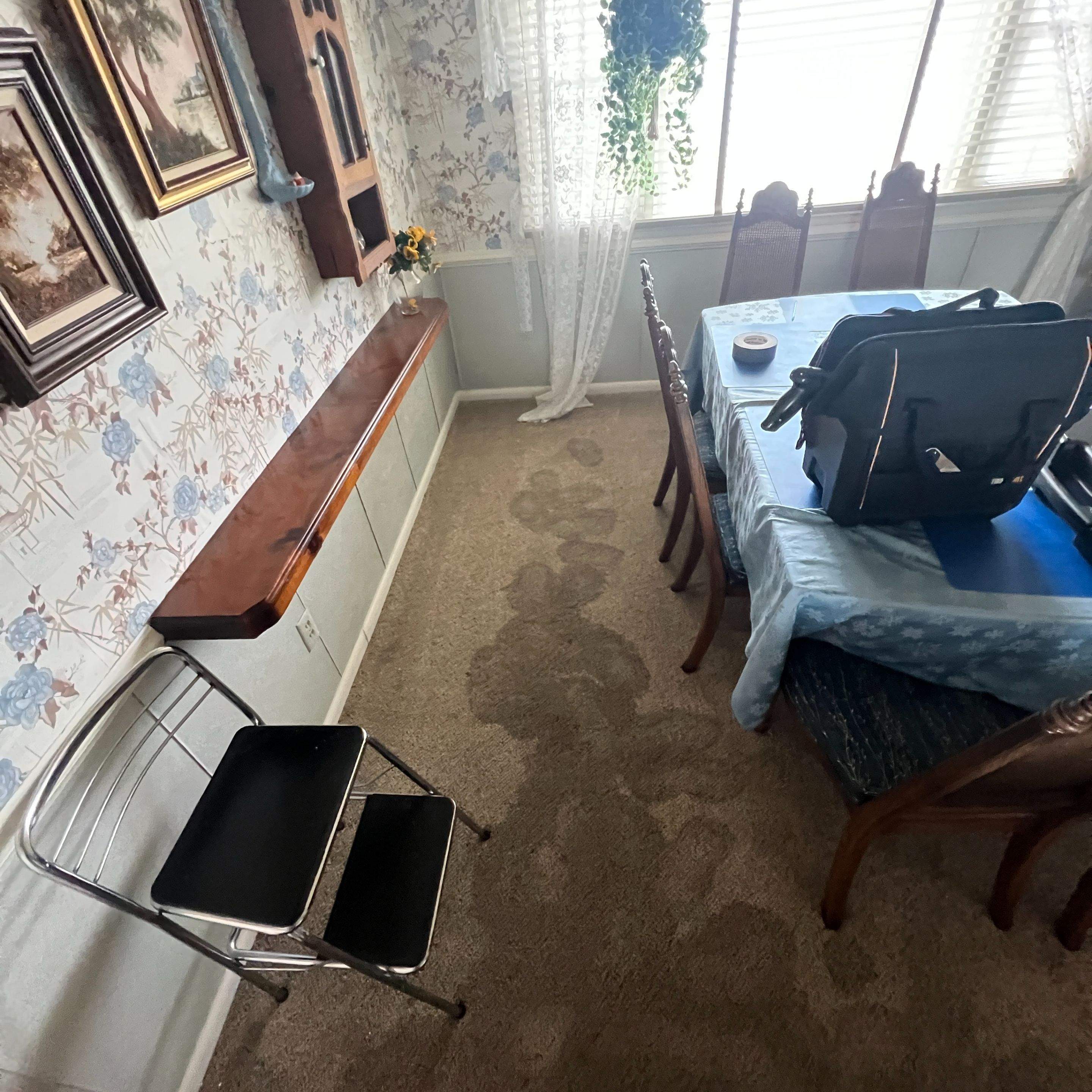
Water that enters through a window head or jamb rarely stays where you see it. It rides the framing down to the sill plate, then either pools on the subfloor or finds a path into the floor below. We use thermal imaging and pin moisture meters to map the actual spread. In most Mount Comfort homes, the wet zone is two to four times larger than the visible stain. If the leak hit during a long storm cell, expect to find moisture in the insulation, sheathing, and sometimes the exterior brick or siding cavity. For a deeper look at how moisture migrates inside walls, the guide on water damage behind walls and hidden leak detection walks through the inspection process step by step.
Common Failure Points on Mount Comfort Windows
Storm intrusion usually traces back to one of a handful of weak points. Knowing where to look helps you describe the problem accurately to your adjuster and your restoration crew.
- Failed perimeter caulk where the frame meets siding or brick veneer
- Cracked or missing head flashing above the window
- Worn weatherstripping on sliding or casement sashes
- Clogged weep holes in vinyl frames that force water inward
- Rotted wood sills that have lost their slope and pond water
- Settled or shifted framing that opens hairline gaps at the jamb
When Storm Damage Becomes a Bigger Claim
A window leak rarely shows up alone after a major storm. We often find roof flashing failures, soffit intrusion, and attic moisture in the same property. If your Mount Comfort home took a direct hit from straight-line winds or hail, request a full envelope inspection. Our storm damage restoration team coordinates with roofers and adjusters so the claim covers everything, not just the window. For attic involvement specifically, the breakdown on attic water damage and roof leak restoration shows what to expect during inspection.
Signs You Need a Professional Today
- Water reached the floor or pooled on the subfloor
- Drywall feels soft, bubbled, or shows a tide line over four inches
- Musty smell within 24 to 48 hours
- Window casing or trim is warped or pulling away
- Outlets in the affected wall buzz, spark, or feel warm
- You see staining on the ceiling of the room below
- Paint is blistering or peeling in a wider pattern than the visible leak
Insurance Claim Language That Helps
Use the phrase "sudden and accidental water intrusion from a covered storm event" when you call your carrier. Document wind speeds, hail size, and the exact time the leak started. Mount Comfort Water Restoration provides moisture maps, photo logs, and IICRC-compliant drying records that adjusters accept without pushback. Ask your carrier whether your policy includes matching coverage for flooring, trim, and paint, since partial repairs on a long wall often look worse than the original damage. Keep a single folder (digital or paper) with every receipt, every drying log, and every text message from contractors. Organized documentation is the single biggest factor in how fast a Mount Comfort storm claim closes.
Cost Ranges for Mount Comfort Window Leak Restoration
| Scope | Typical Mount Comfort Price Range | Timeline |
|---|---|---|
| Inspection and moisture mapping | Free with Mount Comfort Water Restoration | Same day |
| Small leak, dry in place, one room | $650 to $1,400 | 3 to 4 days |
| Drywall removal, insulation, dry-out | $1,800 to $3,500 | 5 to 7 days |
| Subfloor or hardwood involvement | $3,200 to $6,800 | 7 to 10 days |
| Mold remediation if delayed past 72 hours | Add $1,500 to $4,000 | Add 3 to 5 days |
IICRC Water Categories and What They Mean for You
| Category | Source | Typical Window Leak Scenario | Action Required |
|---|---|---|---|
| Category 1 | Clean rainwater | Caught within 24 hours, no contact with insulation or subfloor | Dry in place, monitor |
| Category 2 | Greywater | Water sat 24 to 48 hours or contacted drywall paper and insulation | Remove affected materials, antimicrobial treatment |
| Category 3 | Blackwater | Roof debris, bird waste, or sewage in the water path; over 72 hours wet | Full containment, PPE, demo of porous materials |
Drying Class and Equipment
Most storm window leaks fall into Class 2 or Class 3 drying, depending on how much of the wall and floor absorbed water. Mount Comfort Water Restoration uses air movers (one per 150 square feet of wet surface), LGR dehumidifiers sized to the cubic footage, and HEPA air scrubbers when insulation is removed. Typical dry-out runs three to five days with daily moisture readings logged for your insurance file. If hardwood or engineered flooring is involved, we add specialty floor drying mats that pull moisture from below the surface without forcing premature replacement.