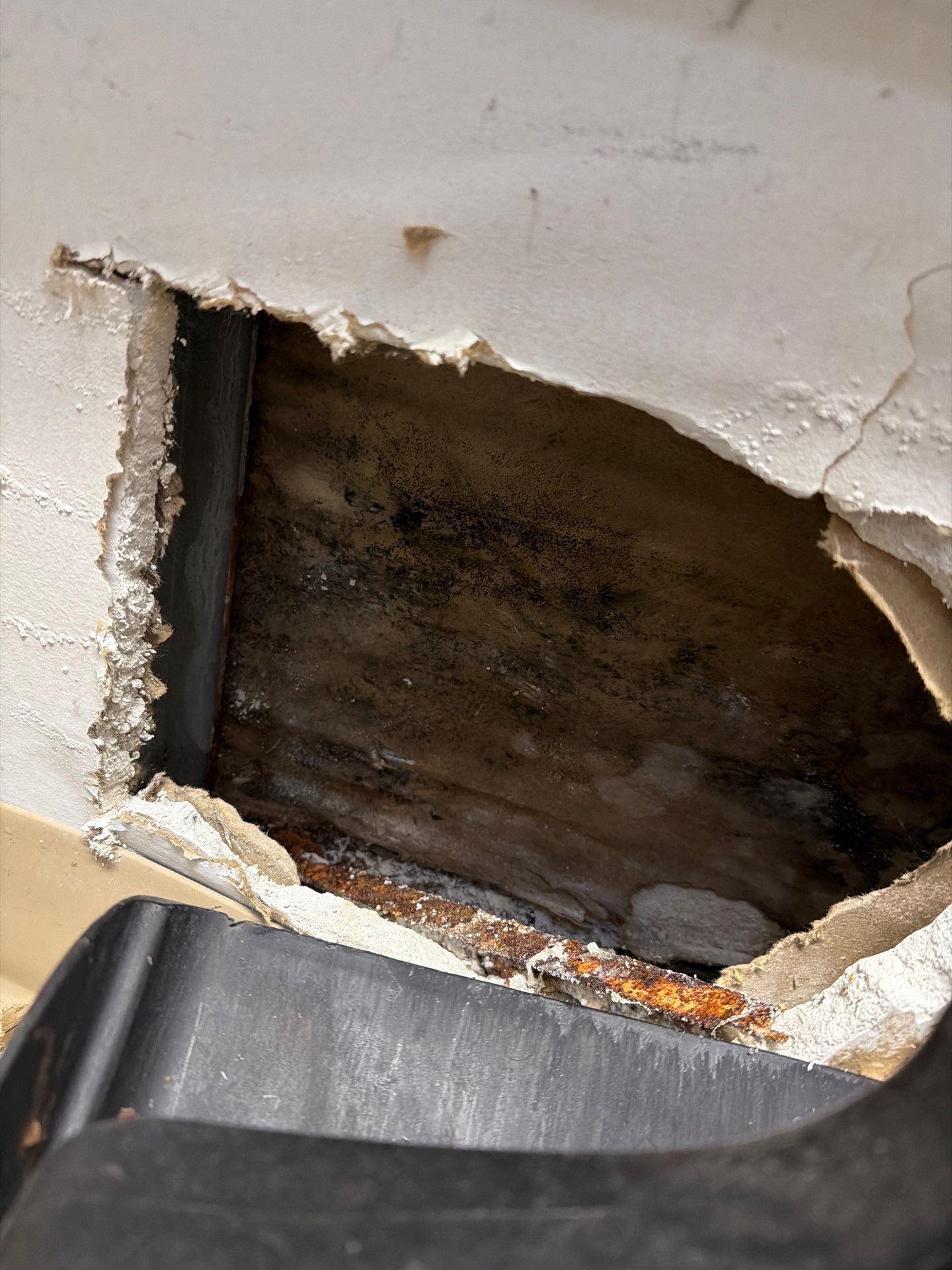
How do I know if there is water damage behind my walls?
Your walls tell on themselves if you know what to look for. The most common signs in Mount Comfort homes are discolored patches that look yellow, brown, or coffee-ringed, paint that bubbles or peels in a small area, baseboards that warp away from the wall, and a soft spongy feel when you press the drywall with your thumb. You may also notice a musty earthy smell that gets stronger when the HVAC kicks on, because the system is pulling air through the wet cavity and spreading spores through the house.
Less obvious clues matter too. A water bill that jumps 20 to 40 dollars for no reason often means a slab or wall leak. Hot spots on a tile floor can signal a hot water line leak under the slab. If your hardwood is cupping along one wall but nowhere else, water is wicking up from inside that wall cavity. Trust your nose and your hands before you trust your eyes, because mold and rot start long before the stain shows up.
Pay attention to insect activity as well. Carpenter ants and silverfish love damp wood, and a sudden bug problem along one wall often points to a moisture issue inside it. Light switches and outlets that feel warm, crackle, or trip the breaker on a wet wall deserve immediate attention, since electrical components and standing water inside a cavity are a fire risk that gets ignored far too often.
What causes leaks inside walls in Mount Comfort homes?
The cause usually depends on the age and style of your home. Houses built before 1990 in older Mount Comfort neighborhoods often have copper or galvanized supply lines that develop pinhole leaks at the joints. Newer construction may have PEX, which holds up well but fails at crimped fittings if the install was rushed. Shower valves, tub spouts, and ice maker lines running through interior walls are the usual suspects in any home of any age.
Weather drives a big share of the calls we take. Winter freeze events crack pipes in exterior walls and unheated bonus rooms, which is why we wrote a full guide on frozen pipe burst winter water damage repair. Heavy spring storms push water through failing flashing and window seals, and that water travels down inside the wall cavity before it shows on the ceiling below. Roof leaks are another quiet source, especially around chimneys and skylights.
Drain and vent lines fail differently than supply lines. Because they are not pressurized, a cracked ABS or cast iron drain may only leak when that fixture is used, which makes the problem intermittent and hard to track. Tub overflow gaskets, shower pan liners, and improperly caulked tile surrounds are the silent culprits behind half the second-floor bathroom leaks we see in Mount Comfort. The water only shows up after dozens of showers have soaked the subfloor.
How much does hidden leak detection and repair cost?
In Mount Comfort, professional leak detection typically runs 250 to 600 dollars as a standalone service, and that fee is often credited back if you move forward with mitigation. Once the leak is located, costs split into two buckets. Plumbing repair for a single pinhole or fitting usually lands between 350 and 900 dollars. Water damage restoration, which includes drying the cavity, removing wet insulation, treating for microbial growth, and replacing drywall, ranges from roughly 1,500 to 7,500 dollars depending on how long the leak ran and how far the water traveled. Our complete price breakdown for water damage restoration walks through every line item your invoice should contain.
Can I detect a hidden leak myself before calling a pro?
You can do some honest first-pass detective work. Turn off every faucet and water-using appliance in the house, then go look at your water meter. If the small leak indicator dial is spinning, you have water moving somewhere it should not. Next, feel walls and baseboards in bathrooms, behind the kitchen sink, around the water heater, and in any room directly below a bathroom. A 15 dollar moisture meter from a hardware store can give you a rough reading, though it will not see deep into the cavity.
What you should not do is start cutting drywall blindly. We have walked into homes where a panicked homeowner opened a 4 by 4 foot hole in the wrong spot and the leak was three feet to the left. Every unnecessary hole is drywall, paint, texture matching, and labor you will pay for later.
What tools do professionals use to find leaks without tearing up walls?
A properly equipped restoration crew shows up with thermal imaging cameras, pin and pinless moisture meters, borescopes, and acoustic listening devices. Thermal cameras read temperature differences across a wall surface and reveal cool wet spots or warm hot-water lines in seconds. Moisture meters confirm what the thermal image suggests, with pinless models reading up to three quarters of an inch deep and pin meters giving exact moisture content readings inside the material.
For pressurized lines, we sometimes isolate sections and use acoustic equipment that amplifies the hiss of water escaping a pinhole. Borescopes let us snake a small camera through a quarter-inch hole behind an outlet or under a vanity to see inside the cavity. The goal is always to find the source with the smallest possible opening, then plan the repair around that one access point.
On tricky slab or supply line leaks, Mount Comfort Water Restoration technicians may also use tracer gas, a safe nitrogen and hydrogen blend pushed into the empty line. The gas escapes at the breach and is detected at the surface with a sensitive probe. This method pinpoints leaks under concrete or behind tile within an inch or two, which can save thousands in demolition.
Will my homeowners insurance cover a leak inside the wall?
Most standard policies in Indiana and across the Midwest cover sudden and accidental water damage, which includes a pipe that bursts or a fitting that fails without warning. They generally do not cover long-term seepage, which insurance carriers define as a leak that has been active for 14 days or more. This is why fast action matters. The faster you document the damage and start mitigation, the easier it is to prove the loss was sudden.
Take photos before anyone touches anything. Save the damaged section of pipe if a plumber replaces it. Keep every receipt. When we handle a claim, we provide moisture maps, drying logs, and photo documentation that adjusters expect to see. If the leak has spread into a finished basement, our basement flooding response team coordinates extraction and structural drying alongside the wall repair so the claim moves as one project instead of three.
How long does it take to dry a wall cavity?
With proper equipment, most wall cavities dry in three to five days. We drill small weep holes at the base of the wall, set up injection drying systems that push warm dry air directly into the cavity, and run dehumidifiers sized to the affected square footage. We monitor moisture daily and do not pull equipment until readings match the unaffected baseline in the same room. Skipping this step is how mold problems start six months later.
Wall assemblies dry at different speeds depending on what is inside them. Fiberglass batts dry quickly once airflow reaches them, but blown cellulose holds water like a sponge and often has to come out. Plaster over lath, common in older Mount Comfort homes, can take a full week even with aggressive drying because the lime plaster releases moisture slowly. Mount Comfort Water Restoration adjusts the drying plan to the wall type rather than running the same playbook on every job.